Breach vs. Default in a Commercial Lease: What’s the Difference and Why It Matters
By Greg Libby, California Licensed Real Estate Broker (DRE #01125276) and Real Estate Expert Witness
Ask most tenants and even some landlords whether “breach” and “default” mean the same thing under a commercial lease, and you’ll usually get a shrug. The two words get used interchangeably in casual conversation, but under a carefully drafted lease they are distinct legal concepts, and the distance between them is often measured in notice letters, cure periods, and hundreds of thousands of dollars in remedies.
Understanding breach vs. default in a commercial lease, meaning where a breach ends and a default begins, is one of the most practical parts of lease literacy for anyone who signs, manages, finances or litigates a commercial real estate lease.
What Is a Breach of a Commercial Lease?
A breach is simply the failure to perform an obligation required by the lease. Either party can commit one.
Common examples of a lease breach
- Late rent: If rent is due on the first and the tenant pays on the third, that’s a breach.
- Insurance lapses: If the tenant is required to carry $2 million in liability insurance and lets the policy lapse for a week, that’s a breach.
- Landlord maintenance failures: If the landlord promises to maintain the HVAC system and lets it sit broken through a heat wave, the landlord has breached.
- Billing and reporting issues: Errors in operating expense or CAM reconciliations, or a tenant’s failure to deliver required sales reports under a percentage rent clause.
Breaches occur constantly in the life of a commercial lease, and most are minor, quickly corrected, and never escalate. A breach, standing alone, typically does not entitle the other party to terminate the lease, evict the tenant, or accelerate rent. It is the raw event, the missed obligation, and not yet the legal condition that unlocks the heavy remedies.
What Is a Default (or “Event of Default”) in a Commercial Lease?
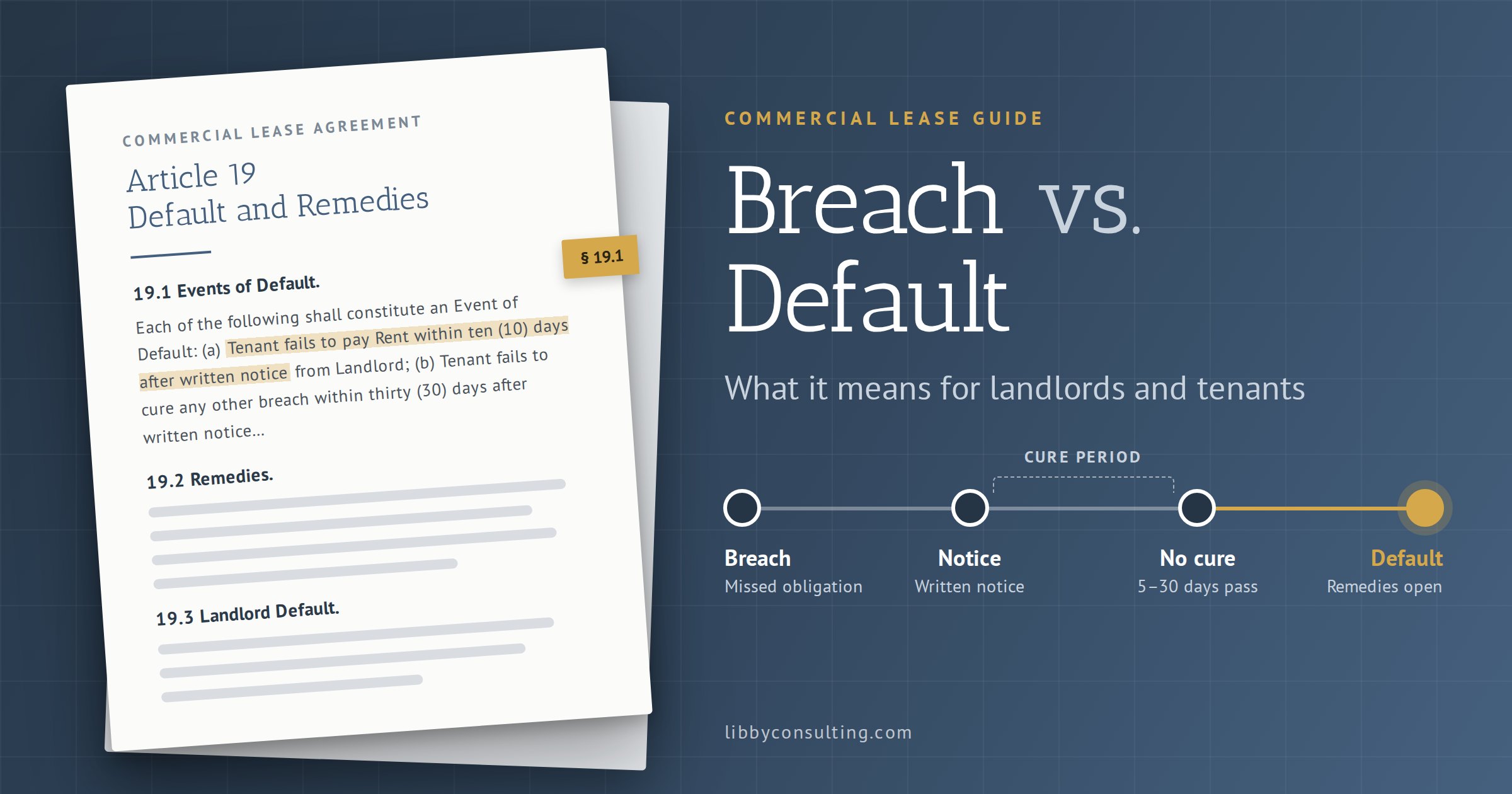
A default is what a breach becomes when the conditions attached to it in the lease have been satisfied. Most commonly, that occurs when the non-breaching party has given written notice and the breaching party has failed to cure within the specified period. In other words, most leases define “default” or “Event of Default” as a breach, plus notice, plus the expiration of an applicable cure period.
This structure is deliberate. Commercial leases are relationships that run for years, and neither party benefits from an arrangement so fragile that a single late payment or an expired certificate of insurance blows up a tenancy meant to last a decade. The notice-and-cure mechanism gives the breaching party a defined window to fix the problem before the relationship reaches the point of no return.
How notice and cure periods work
A typical lease might provide, for example, that:
- a monetary breach ripens into a default if the tenant fails to pay within five (5) or ten (10) days after written notice; and
- non-monetary breaches ripen into a default if the tenant fails to cure within thirty (30) days after notice, often with an extension if the cure reasonably requires more time and the tenant is diligently pursuing it.
In California, landlords pursuing possession must also comply with statutory notice requirements, such as the notice to pay rent or quit under Code of Civil Procedure §1161, in addition to whatever notices the lease itself requires. Careful lease administration, including tracking notice addresses, deadlines and delivery methods, helps both sides avoid costly procedural mistakes.
Incurable and immediate defaults
Some leases carve out certain breaches as immediate or incurable defaults, for which no notice or cure period applies. Common examples include:
- unauthorized assignment or subletting;
- abandonment of the premises;
- a bankruptcy filing or insolvency event;
- repeated late payments beyond a stated number in a 12-month period.
Whether a particular breach is curable depends entirely on the lease language, which is why reviewing a clear lease abstract before acting is so important.
Breach vs. Default at a Glance
| Breach | Default (Event of Default) | |
|---|---|---|
| What it is | Failure to perform a lease obligation | A breach that remains uncured after required notice and cure period |
| Nature | A fact | A legal status |
| Notice required? | No, it happens when the obligation is missed | Usually yes, unless the lease makes it an immediate or incurable default |
| Typical remedies available | Limited: demand performance, send notice | Termination, retaking possession, damages, drawing on security, lender or guarantor rights |
| Risk of acting too soon | Acting on a mere breach can create liability for the party acting | Remedies are generally available once the default is established |
Why the Difference Between Breach and Default Matters
The practical significance is that a lease’s remedies are almost always keyed to default, not breach.
For landlords: remedies require a default
Until a breach matures into a default, the landlord generally cannot terminate the lease, retake possession, sue for accelerated rent, or draw down a letter of credit or security deposit under the default provisions. California Civil Code §§1951.2 and 1951.4 describe the principal remedies available to commercial landlords once a tenant defaults, including damages after termination or keeping the lease in effect and recovering rent as it comes due, if the lease allows it.
A landlord who jumps the gun, perhaps by changing the locks after a late payment before sending the required notice and letting the cure period run, may end up liable for wrongful eviction or breach of the covenant of quiet enjoyment.
For tenants: withholding rent over a mere breach is risky
The same logic applies in the other direction. A tenant facing a landlord who has failed to make repairs usually cannot simply stop paying rent or walk away. The tenant’s rights to fix the problem itself, offset costs against rent, or terminate (to the extent the lease grants any) are typically conditioned on the landlord’s failure ripening into a default after notice and an opportunity to cure.
A tenant who withholds rent over a mere breach may hand the landlord exactly the default it needs to terminate the tenancy.
For lenders, guarantors and subtenants
The distinction also matters to third parties. Lenders, guarantors, and subtenants often have rights and obligations that spring from an “Event of Default” as defined in the lease, such as a lender’s right to cure on the tenant’s behalf or a guarantor’s exposure under a guaranty. Loan documents and SNDA agreements frequently point to the lease’s default definition, so sloppy drafting in one document can ripple through the entire capital stack. Subtenants should also understand how a default under the master lease can affect their own occupancy (see Sublease Tips: The Sublessee’s Perspective).
Facing a lease breach or default? Whether you’re a landlord, tenant, lender or attorney, Greg Libby can review the lease, the notices and the timeline, and give you an objective assessment of where you stand before you act. Schedule a consultation →
Practical Tips for Landlords and Tenants
Tips for landlords and property managers
- Read the default and notice provisions carefully before sending any notice, including notice addresses, delivery methods and cure periods.
- Document every breach, notice and communication in writing.
- Don’t take possession, change locks or draw on security until a default has clearly occurred and the required legal process has been followed.
- Enforce the lease consistently. Selective enforcement can complicate later disputes.
Tips for tenants
- Calendar every notice you receive and the cure deadline that follows.
- Respond in writing, and document your cure efforts, especially for non-monetary breaches that take time to fix.
- Before withholding rent or exercising self-help, confirm that the landlord’s breach has actually ripened into a default under the lease.
- Review guaranty and sublease documents to understand who else is affected by a default.
For help setting up lease tracking systems or reviewing a lease before a dispute develops, explore Greg’s real estate consulting services and property management consulting.
When a Lease Default Becomes a Dispute
When landlords and tenants disagree about whether a breach occurred, whether notice was proper, whether a cure was adequate, or what damages flow from a default, the case often turns on industry practice as much as on the lease language. A commercial real estate expert witness can help attorneys by:
- explaining customary lease practices, notice procedures and cure standards;
- evaluating whether a party’s actions were commercially reasonable;
- analyzing damages, including lost rent, re-letting costs and market rent at the time of default;
- assessing whether a property manager met the professional standard of care in handling the breach;
- preparing expert reports and testifying at deposition, arbitration or trial.
Learn more in our guide, How to Find the Right Expert Witness for Your Real Estate Litigation Case.
Frequently Asked Questions
What is the difference between a breach and a default in a commercial lease?
A breach is the failure to perform a lease obligation. A default, often called an “Event of Default,” is the legal status that results when a breach isn’t cured after the notice and cure period required by the lease. Most lease remedies depend on a default, not a mere breach.
Can a landlord evict a commercial tenant for one late rent payment?
Generally not immediately. Most leases require written notice and a short cure period before a late payment becomes a default, and California landlords must also follow statutory notice and unlawful detainer procedures. Some leases treat repeated late payments as an incurable default.
What is a cure period in a commercial lease?
A cure period is the time the lease gives the breaching party, after written notice, to fix the problem before it becomes a default. Monetary cure periods are often 5 to 10 days; non-monetary cure periods are often 30 days, sometimes with extensions.
What is an incurable default?
An incurable default is a breach the lease treats as an immediate default with no notice or cure period, such as unauthorized assignment, abandonment or bankruptcy.
Can a tenant withhold rent if the landlord breaches the lease?
Usually only if the lease expressly allows it and the landlord’s breach has ripened into a default after notice and an opportunity to cure. Withholding rent over a mere breach can put the tenant in default.
The Bottom Line
A breach is a fact; a default is a legal status. The breach is the missed obligation, and the default is what that missed obligation becomes once the lease’s notice-and-cure machinery has run its course. Remedies live on the far side of that line, which is why sophisticated parties negotiate the default provisions as hard as they negotiate the rent.
Get an Objective Review of Your Lease Default Situation
With more than 30 years of commercial real estate experience, including more than 5,700 properties managed, Greg Libby helps landlords, tenants, property managers, lenders and their attorneys understand breach and default issues before they become costly disputes, and serves as an expert witness when they do. Greg’s analysis follows the lease and the evidence, not the side that hired him.
Contact Greg Libby today → or call (760) 688-6795 (San Diego) or (310) 691-1992 (Los Angeles). Have questions about retaining an expert? Visit our FAQ.
This post is for general informational purposes only and is not legal advice. Lease terms and state law vary significantly, so consult a qualified real estate attorney about any specific lease or dispute.